When the
Hillside
Gave Way,
We Didn’t.
A record-breaking storm. A community buried in mud. A property
manager’s call, and a crew on site within hours.
The call that set everything in motion.
When the hillside at Indian Hills Apartments gave way, the property manager’s first call was to us. Within hours, our team was on site while mud was still moving and the full scope of the damage was still coming into focus.
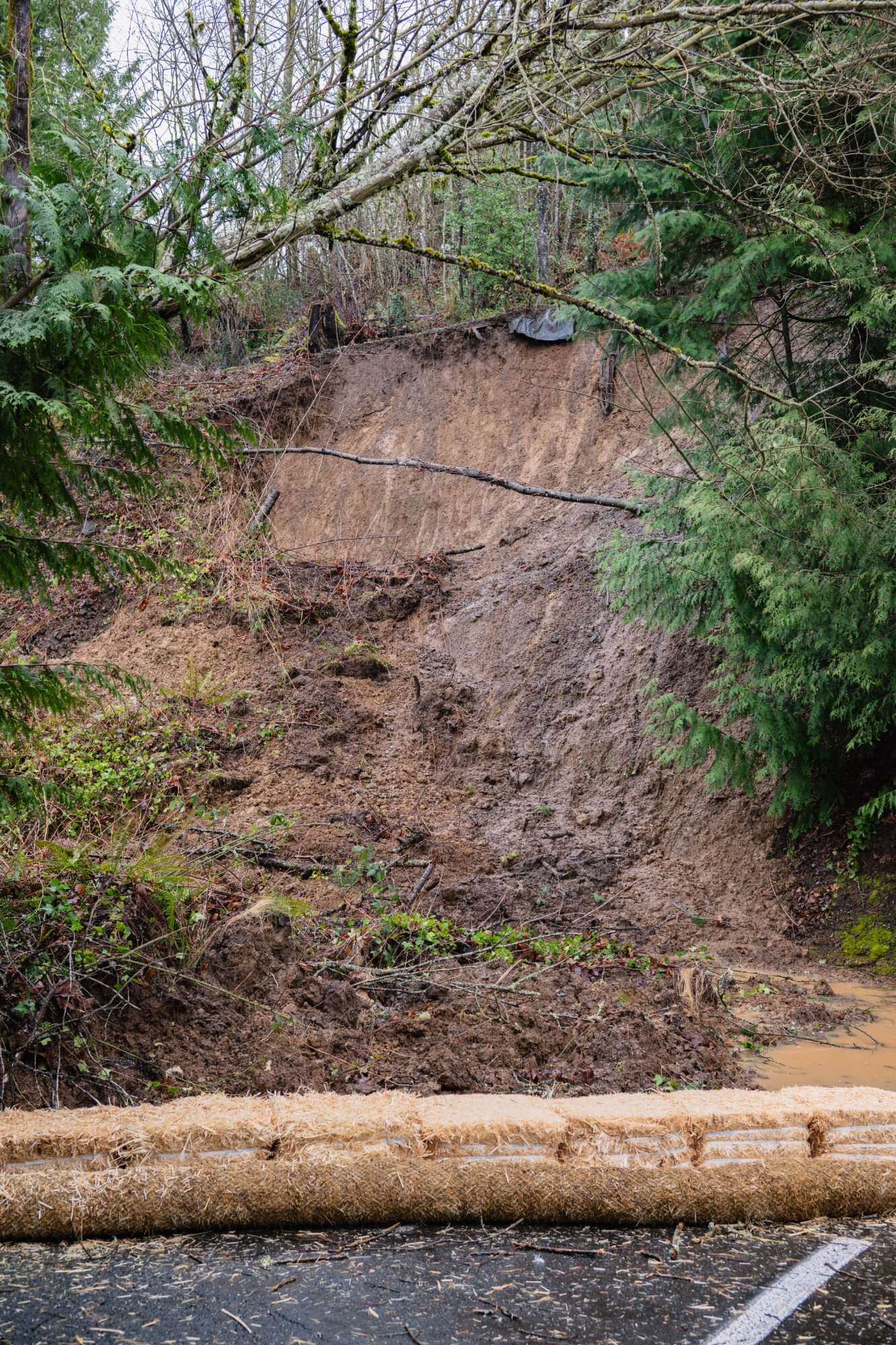
What we found was serious. A massive wall of saturated earth had collapsed into the parking area, trapping vehicles behind the debris and cutting off resident access entirely. The hillside above was still unstable. The priority was clear: stop the situation from getting worse, then start making it better.
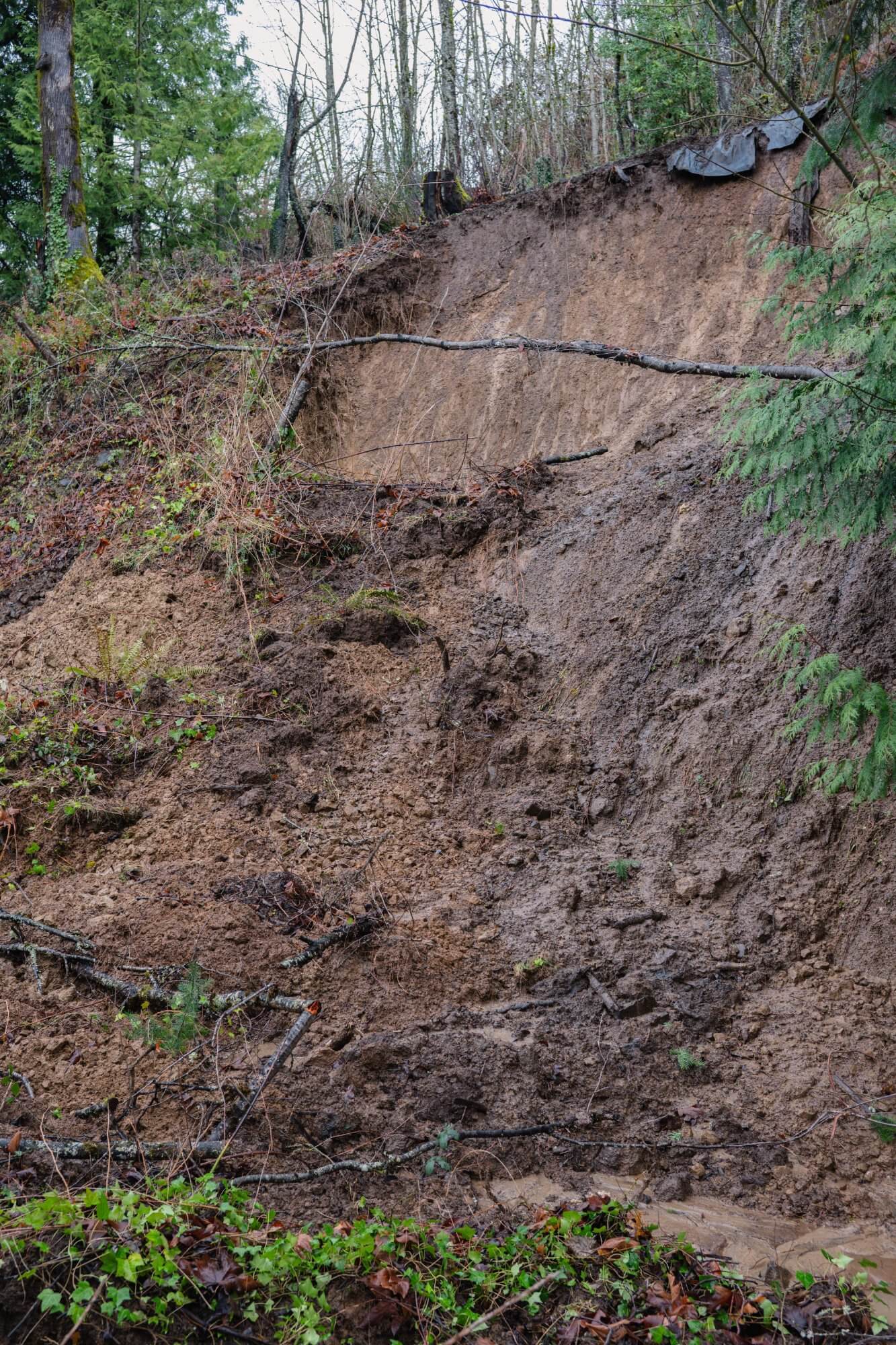
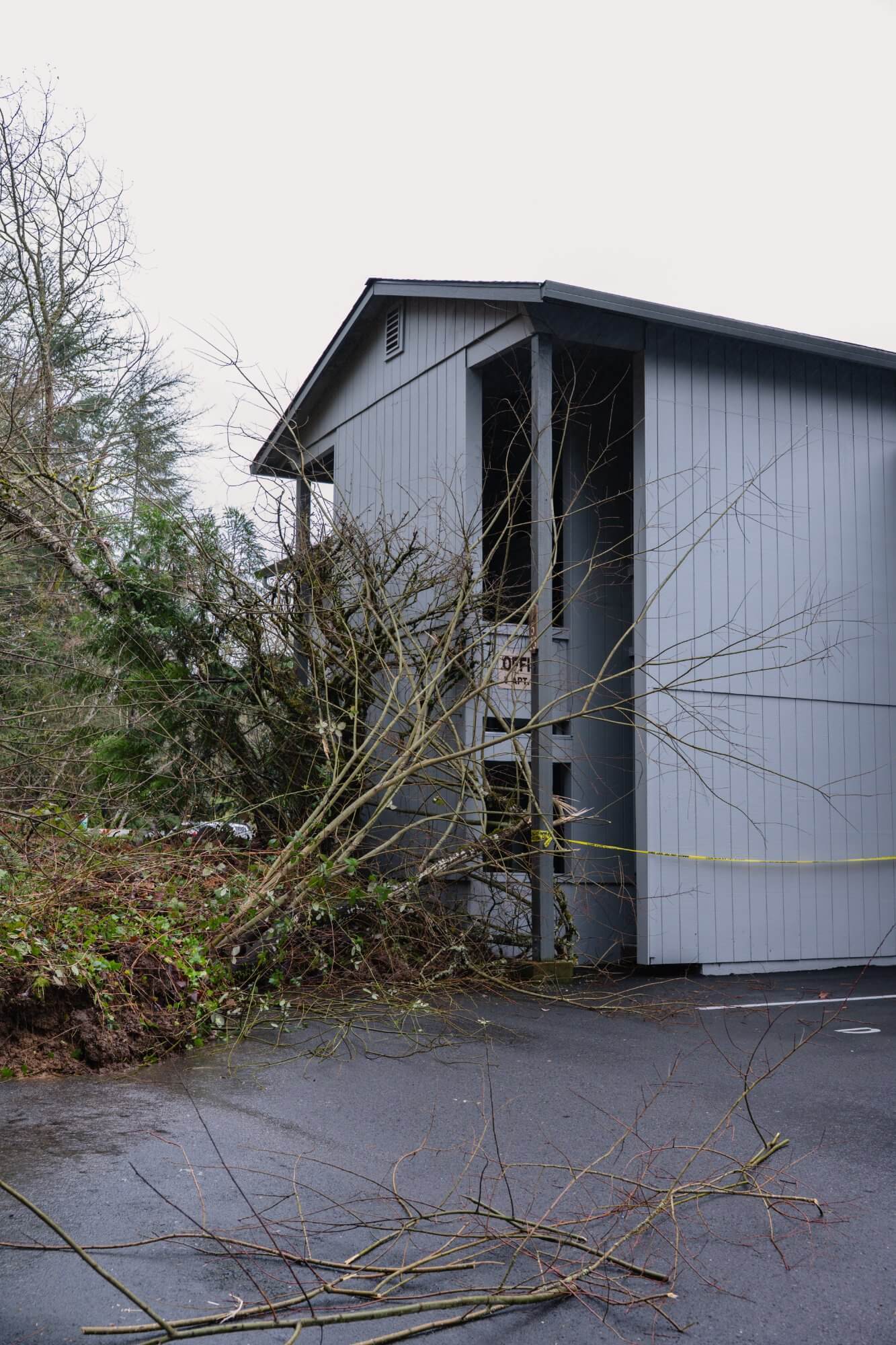
The immediate aftermath: trees and saturated earth came down against occupied buildings, burying vehicles and blocking the primary access road.
Stop the bleeding first.
You can’t fix the damage if the damage is still happening. Our first move on site wasn’t to bring in the excavator. It was to deploy hay bales along the perimeter of the slide to absorb standing water and prevent it from pooling further into the debris field. Simple, fast, and effective. Keep the situation from compounding overnight while we planned the full response.
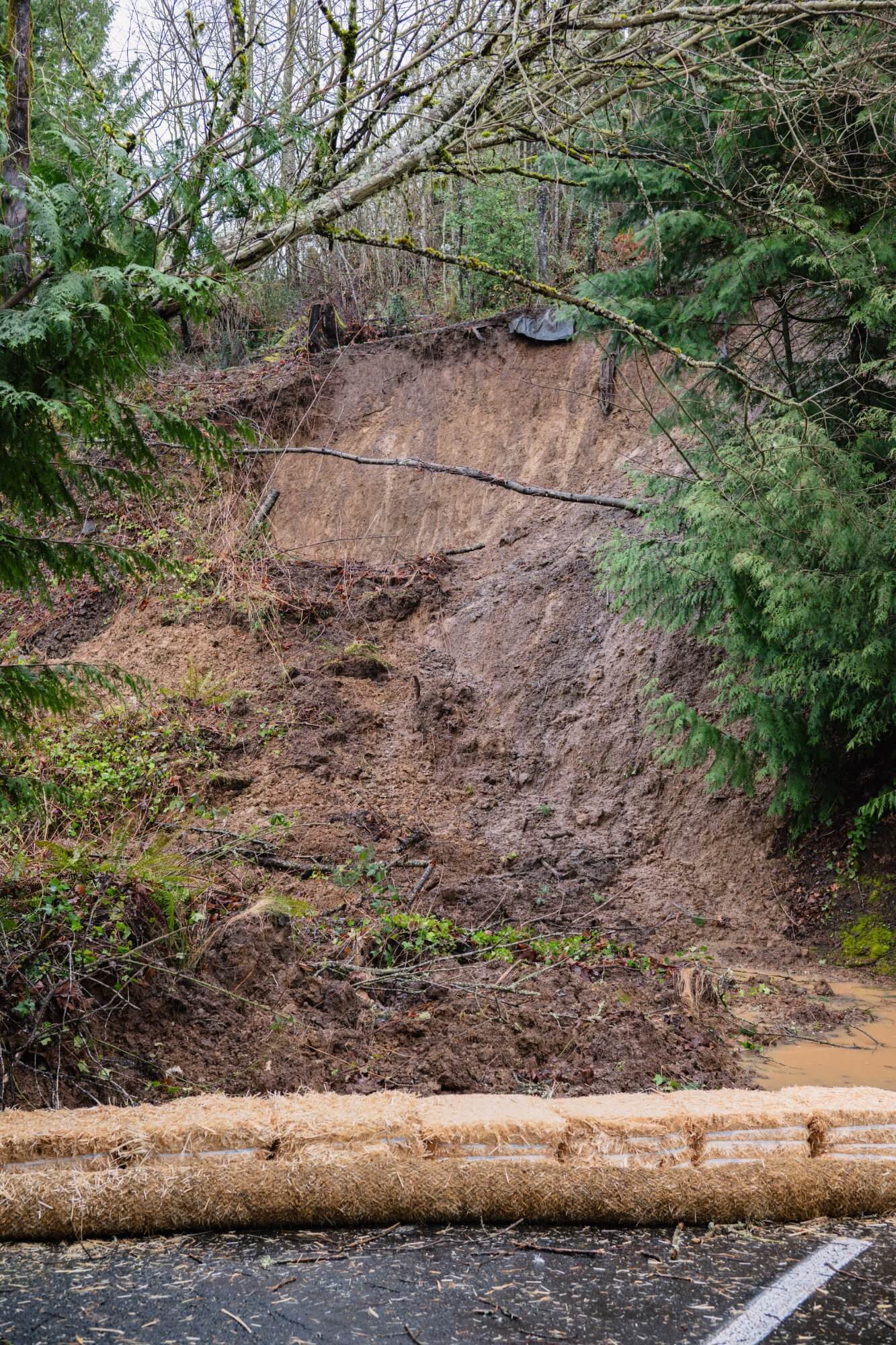

The full scope of the slide, viewed from the parking area. Tons of mud, rock, and debris came down between residents and the only way in or out, leaving more than 30 cars trapped on the other side.
Heavy equipment.
All hands.
One push.
We returned the next morning with the full crew and a full equipment load. The excavator went straight to work on the debris pile, clearing tons of mud, rock, and material from the access road, freeing the vehicles that had been trapped behind the slide.

Machine and boots on the ground, working in tandem. The excavator cleared the road while crew members coordinated to free every vehicle trapped behind the slide.
By the end of Day 2, the primary access road was completely clear and all 30-plus trapped vehicles had been freed. We didn’t leave when it got hard. We stayed until every car was out and the road was open. Once the road was clear, we installed a run of heavy concrete barriers along the base of the slope: a physical line of defense in case more of the hillside moved.
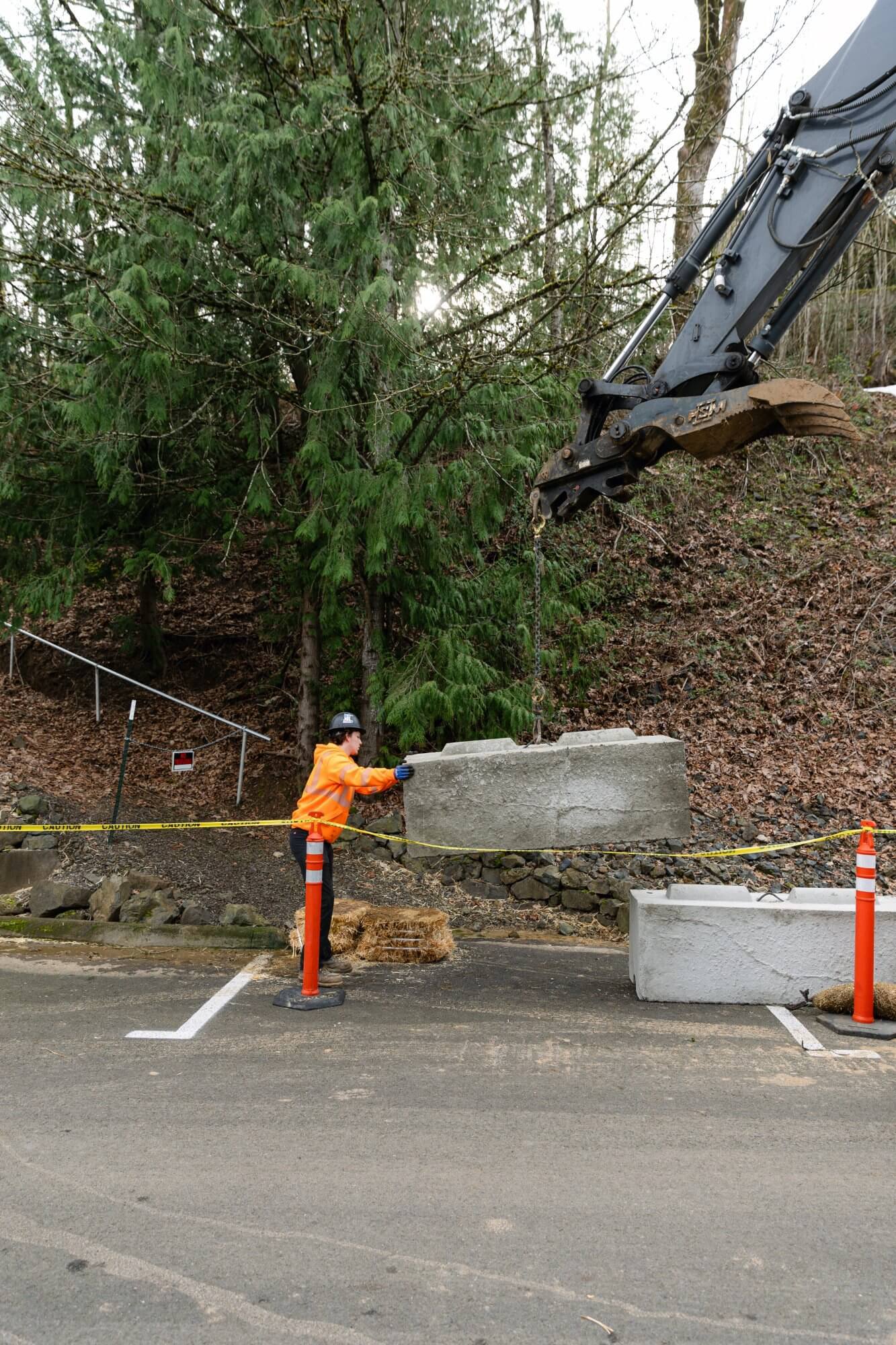

Concrete barriers, each weighing thousands of pounds, delivered by flatbed and set in place by the excavator along the base of the slope. A physical wall between an unstable hillside and the community below.
When engineers step in,
we adapt.
The day after clearing the road, it became clear the situation required structural engineers before any permanent remediation could move forward. That was the right call, and our job shifted accordingly. We returned to the site to secure it for the longer term: keeping the hillside dry, stable, and protected until the engineers could complete their assessment and permanent solutions could be designed.
That meant three things. First, we tarped the entire exposed slope face with heavy-gauge sheeting to prevent further rainfall from saturating the soil. Second, we sandbagged the site to direct water away from vulnerable areas. Third, we added additional concrete barriers to widen the buffer zone in case more of the hillside shifted before engineering work began.
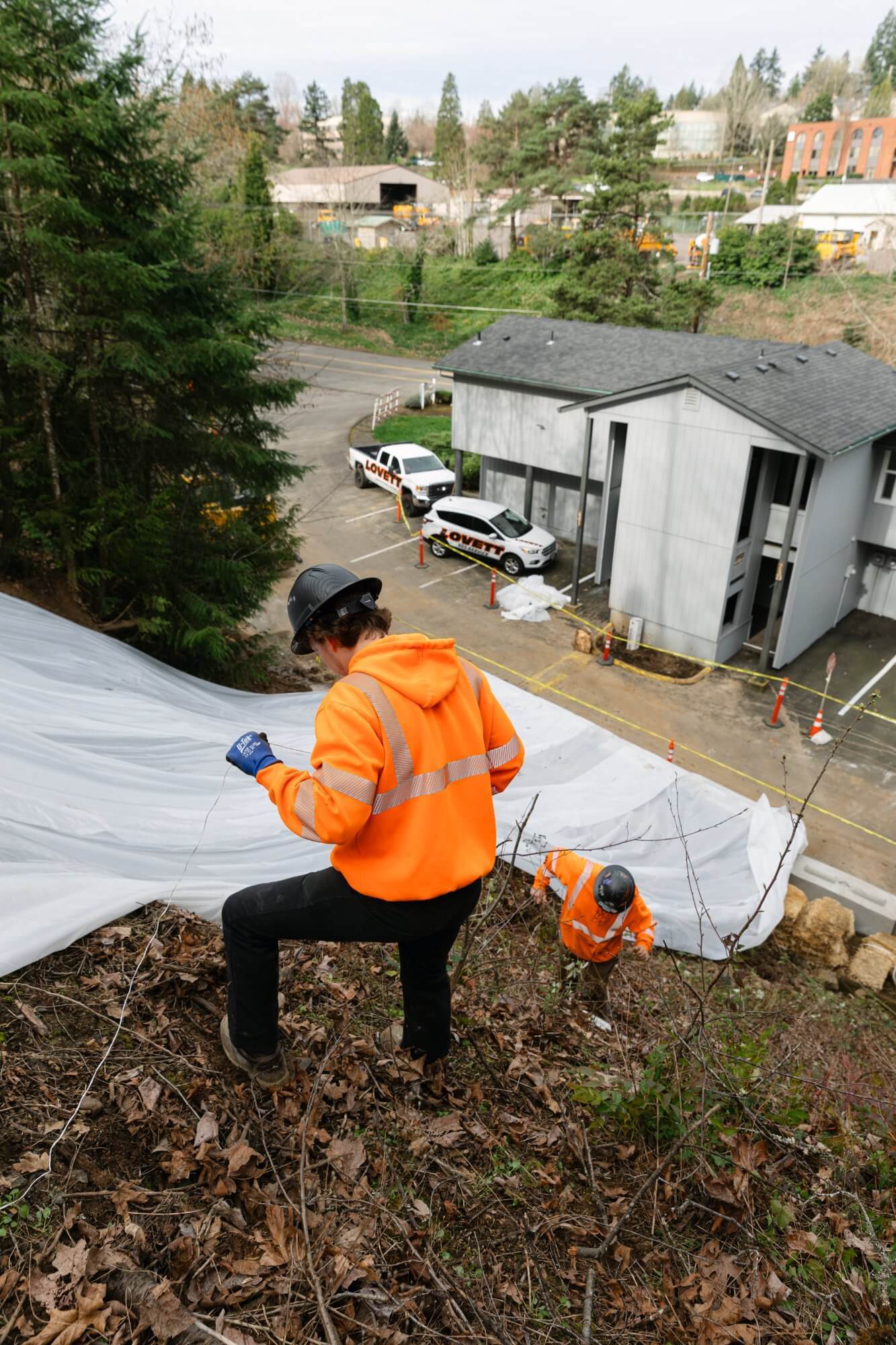

The view from the top: crew members securing heavy-gauge tarping across the full face of the slide. Lovett vehicles visible in the lot below. The team worked from both the hillside and the ground simultaneously.

From Crisis to Secure,
In Three Days.
This is how Lovett responds when the stakes are real. Not a checklist. The actual sequence of decisions made on the ground over those three days.
The property manager called and we were on site within hours. Before anything else, we deployed hay bales along the slide perimeter to absorb standing water and prevent further pooling. You can’t fix the damage if the damage is still growing.
Back at dawn with the full crew and equipment. The excavator cleared the access road completely. We freed every one of the 30+ vehicles trapped behind the slide. Then we placed a run of massive concrete barriers at the base of the slope, a physical barrier in case more earth moved.
When the engineering team determined more assessment was needed before permanent work could begin, we adapted. We returned to tarp the full slope face, sandbag vulnerable runoff zones, and add more concrete barriers, keeping the site stable and dry until the engineers could complete their work.

Ground-Level Results
-
Same-Day Emergency Response On site within hours of the property manager’s call, arriving before conditions could deteriorate further. Initial water control measures deployed the first night to prevent pooling and spread.
-
Full Debris Removal & Road Clearance Heavy excavation cleared thousands of pounds of mud, rock, and debris from the primary access road, restoring safe passage for residents and emergency vehicles by end of Day 2.
-
30+ Vehicles Freed More than 30 vehicles had been cut off behind the slide with no way out. Our crew cleared the road and stayed until every last car was freed. Not when quitting time came. Not when it got dark.
-
Concrete Barrier Wall A full run of heavy concrete barriers placed along the base of the slope on Day 2, creating a physical line of defense against any future soil movement before engineers could assess the site.
-
Engineer-Coordinated Long-Term Securing Once engineers confirmed the scope required professional remediation design, we returned on Day 3 to tarp the full slope, deploy sandbags, and add additional barriers, keeping the site stable and dry until permanent work could begin.
“Natural disasters aren’t our everyday business. But solving real problems for Portland neighbors, fast and without excuses, absolutely is.”
This is the standard we hold ourselves to on every job, planned or otherwise.
Safety. Kindness. Accountability. These aren’t poster words at Lovett. They’re the reason our crew showed up within hours of the call, adapted when engineers changed the scope, and left the site more secure than they found it.
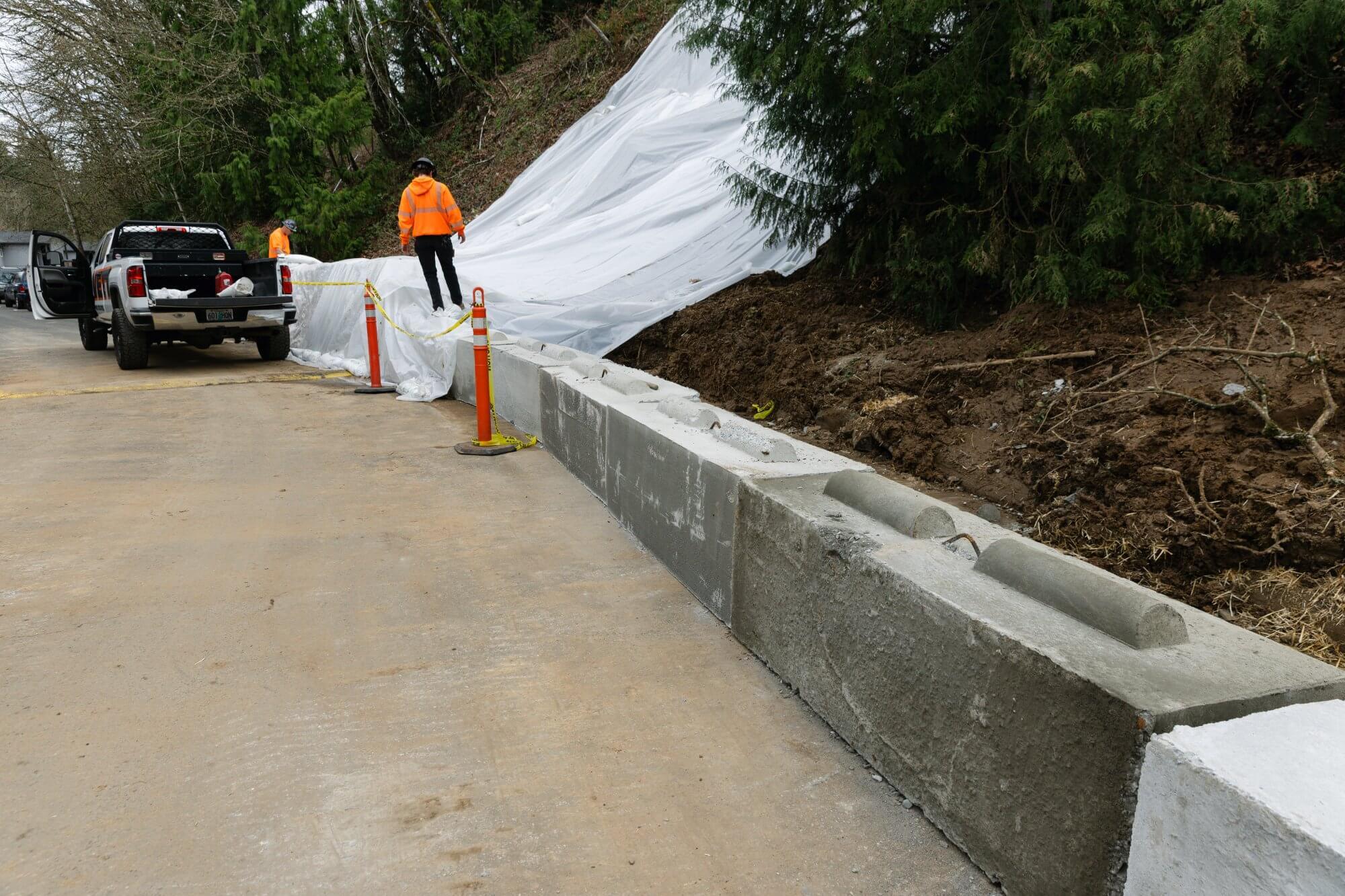
The finished site: access road clear, concrete barrier wall in place, slope fully tarped and sandbagged. Secured and ready for the engineers, and whatever the next storm brings.
Portland’s Emergency
Crew. On Call Now.
When the unexpected happens, and in the Pacific Northwest it will, you need a team with the equipment, the expertise, and the character to respond immediately. That’s us.